
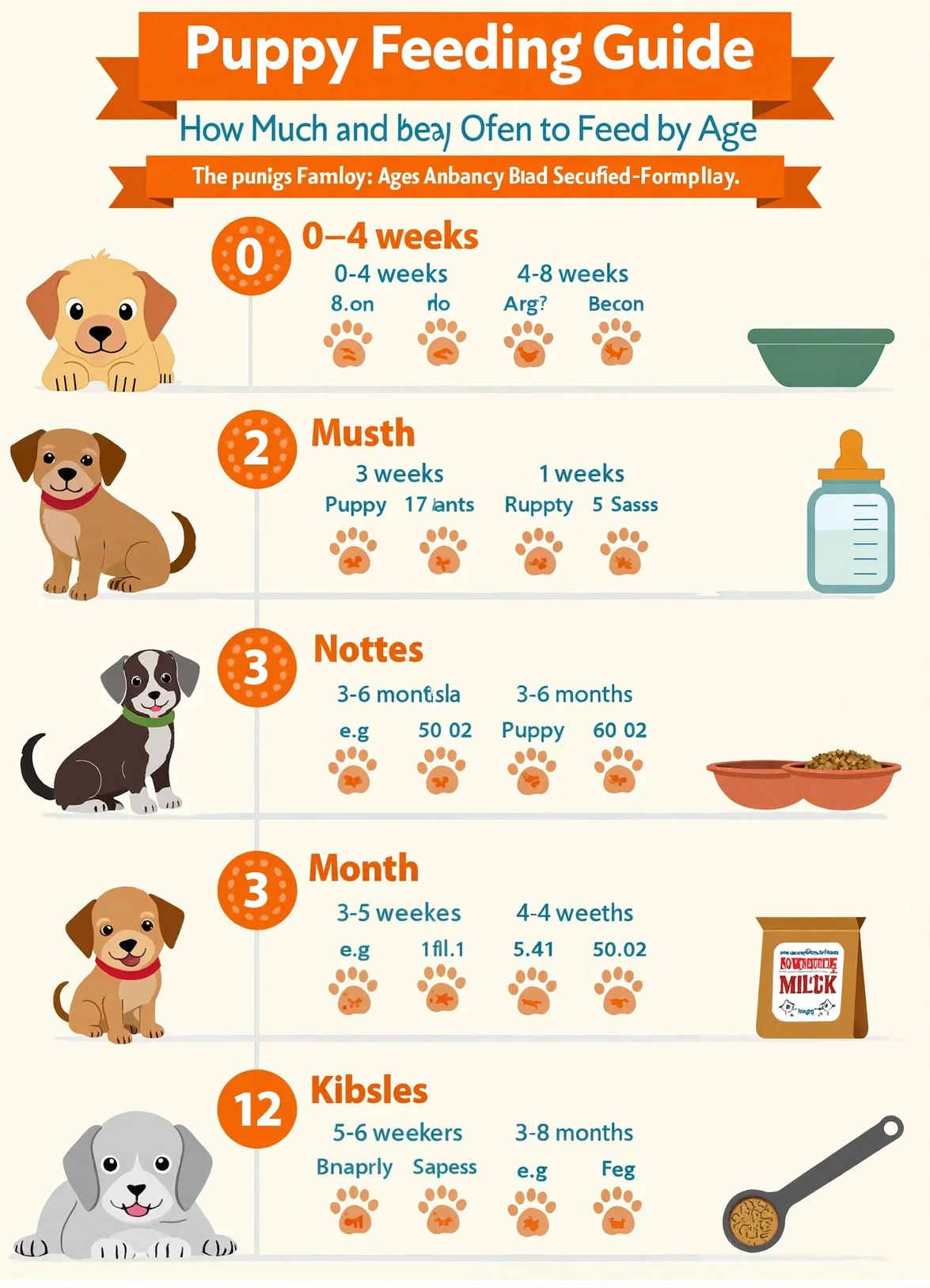
Feeding your puppy the right amount of food at the right times each day is one of the most important parts of early care. A good feeding routine supports healthy growth, provides steady energy, and can even help avoid future health problems. In this guide, you’ll find specific, age-based feeding advice to help you take care of your puppy from weaning through adulthood.
Why Proper Feeding Matters for Puppies
Your puppy’s early development depends heavily on nutrition. During the first year of life, puppies grow quickly, build strong bones and muscles, and develop immune systems. Because their needs are different from adult dogs, it’s important to feed a diet designed for puppies and to follow an appropriate schedule.
Feeding too much can lead to obesity or joint problems, while feeding too little can slow growth and weaken the immune system. Choosing the right food and sticking to a schedule can support healthy development and help prevent problems.
Key Factors That Affect Feeding
Several factors affect how much and how often to feed your puppy:
- Age
- Breed size (small, medium, large, or giant)
- Current weight and expected adult weight
- Activity level
- Health conditions
Always follow your veterinarian’s advice, especially if your puppy has special needs. The guidelines below are general, but your puppy may need a slightly different approach.
Feeding by Age: From Weaning to Adulthood
Weaning to 8 Weeks Old
What to Feed
Most puppies begin weaning around 3 to 4 weeks old. During this stage, they shift from mother’s milk to solid food. A wet mixture of high-quality puppy food and warm water or puppy formula can help them transition.
How Often to Feed
Feed 4 times per day.
How Much to Feed
Start with small amounts. Let them eat for about 10 to 15 minutes, then remove the food. Puppies at this stage eat very small amounts, often just a few tablespoons at a time.
8 to 12 Weeks Old
What to Feed
Choose a commercial puppy food labeled “complete and balanced” for growth. Kibble can be softened with water if needed, but many puppies can eat it dry by 10 to 12 weeks.
How Often to Feed
Feed 4 meals a day.
How Much to Feed
Follow the package guidelines based on weight, but adjust if your puppy seems too thin or is leaving food behind. As a general rule:
- Small breeds (under 20 lbs adult weight): 1/2 to 1 cup per day, divided into 4 meals.
- Medium breeds (20–50 lbs adult weight): 1 to 2 cups per day.
- Large breeds (over 50 lbs adult weight): 2 to 3 cups per day.
12 to 16 Weeks Old
What to Feed
Stick with puppy food, as it provides the nutrients needed for growth. Avoid switching to adult food too soon.
How Often to Feed
Feed 3 times per day.
How Much to Feed
Your puppy’s appetite may increase. Monitor their weight and adjust accordingly:
- Small breeds: 1 to 1.5 cups per day.
- Medium breeds: 2 to 3 cups per day.
- Large breeds: 3 to 4.5 cups per day.
4 to 6 Months Old
What to Feed
Keep feeding puppy food. If your puppy is very active or growing fast, a formula designed for large breed puppies (if applicable) can support joint health.
How Often to Feed
Feed 3 times per day. Some smaller breeds may be ready for 2 meals a day.
How Much to Feed
- Small breeds: 1 to 1.75 cups per day.
- Medium breeds: 2.5 to 3.5 cups per day.
- Large breeds: 4 to 6 cups per day.
6 to 12 Months Old
What to Feed
Continue with puppy food until full maturity. Large breeds mature slower and may need puppy food longer than small breeds.
How Often to Feed
Feed 2 times per day.
How Much to Feed
Feeding amounts depend on size, but the appetite may level off as growth slows:
- Small breeds: 1 to 2 cups per day.
- Medium breeds: 2.5 to 4 cups per day.
- Large breeds: 4 to 7 cups per day.
How to Choose the Right Puppy Food
Read the Label
Look for food labeled as “complete and balanced” by AAFCO for growth. It should list meat or a meat meal as the first ingredient.
Choose Breed-Size Specific Food
Small breed puppy foods have smaller kibble and more calories per cup. Large breed puppy foods often contain lower calcium and phosphorus levels to protect joints.
Consider Dry vs. Wet Food
Dry kibble is convenient and helps with dental health. Wet food is more palatable and hydrating but may be more expensive and spoil faster.
Avoid Table Scraps and Treats
Limit treats to 10% of daily calories. Table scraps can upset your puppy’s stomach and lead to weight gain.
Signs Your Puppy Is Eating the Right Amount
- Healthy weight and body shape (you can feel ribs but not see them clearly)
- Steady weight gain
- Normal stools (not too hard or too soft)
- Good energy levels
- Shiny coat and clear eyes
Feeding Tips for Success
Stick to a Routine
Feed at the same times every day. This helps regulate digestion and makes house training easier.
Provide Fresh Water
Always keep clean water available. Puppies can get dehydrated quickly, especially if they eat dry kibble.
Don’t Free Feed
Leaving food out all day can lead to overeating. Scheduled meals help you track appetite and portion size.
Watch Growth Curves
Regular weigh-ins can help track healthy growth. If you’re unsure whether your puppy is growing at the right pace, check with your vet.
Transition Food Gradually
When changing food, do it slowly over 7 to 10 days. Mix a small amount of the new food with the old and gradually increase the new.
When to Switch to Adult Dog Food
Most puppies switch to adult dog food between 10 and 12 months of age. However, large or giant breeds may need to stay on puppy food until 12 to 18 months.
Talk to your vet before switching. If your puppy is gaining weight steadily and appears fully grown, it may be time to transition.
Special Considerations
Underweight Puppies
If your puppy is thin or not gaining weight, check for these issues:
- Not eating enough at meals
- Worms or other parasites
- Health problems like infections or illness
- Food that is too low in calories
Work with your vet to address any problems and consider adjusting portion sizes or choosing a higher-calorie food.
Overweight Puppies
Puppies can become overweight if they eat too much or get too many treats. Watch for:
- Round belly
- Difficulty feeling ribs
- Low energy or heavy breathing after mild activity
Reduce portion sizes and treats. Make sure your puppy is getting regular play and exercise.
Feeding Multiple Puppies
If you’re raising more than one puppy, feed them in separate areas to prevent food guarding. This also helps you track how much each one is eating.
Puppies with Health Issues
Some puppies have special dietary needs due to allergies, digestive problems, or other conditions. In these cases, a prescription or limited-ingredient diet may be needed. Your vet can help choose the right food and feeding plan.
Conclusion
Feeding your puppy properly is one of the most important things you can do to support their health and development. Each stage of growth comes with unique nutritional needs. By understanding how much and how often to feed your puppy based on age and size, you can help your dog grow into a strong and healthy adult.
Stick to a schedule, choose quality puppy food, and adjust based on your dog’s condition and your vet’s guidance. Taking the time to get feeding right now can lead to fewer problems later and set your puppy up for a long, happy life.
Frequently Asked Questions
Can I feed my puppy adult dog food?
No. Puppy food has higher protein, fat, and nutrients for growth. Feeding adult food too early can lead to nutritional imbalances.
How do I know if I’m feeding enough?
Track your puppy’s weight and body shape. If ribs are too visible or the puppy is losing weight, increase food slightly. Ask your vet for advice if unsure.
What time of day should I feed my puppy?
Spread meals evenly through the day. For example, if feeding 3 times per day, aim for morning, midday, and early evening.
Should I feed before or after exercise?
Feed your puppy at least 30 minutes before or after heavy play to prevent stomach upset, especially in large breeds.
How can I tell if my puppy is ready for adult food?
Watch for slowing growth and consult your vet. Most dogs switch between 10 to 12 months, though larger breeds may need more time.
Is it okay to give my puppy treats?
Yes, but keep treats under 10% of daily calories. Choose ones made for puppies and avoid high-fat human foods.
How often should I change my puppy’s food?
Stick with one good-quality puppy food unless there’s a problem. Sudden changes can upset digestion.
Can I feed my puppy raw or homemade food?
Talk to your vet before doing so. Homemade or raw diets require careful planning to be balanced and safe.
